Translate this page:
You can translate the content of this page by selecting a language in the select box.
Share this link!
The Mami Wata Yeveh Vodoun tradition is one of the oldest ancient indigenous religions of Africa. Its complex cosmology, philosophy, and ritual system is guided by a system of divination known as Afa (Fon “Fa”, Yoruba “Ifa”). Afa is defined in the Mami Wata Vodoun as a sacred name used to refer to a complex and comprehensive system of divination and gifted sight (clairvoyance). When combined, it reveals the divine will of the God/dess and Ancestors, and the immediate dead.
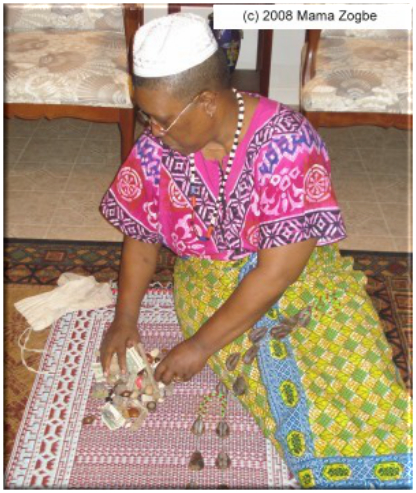
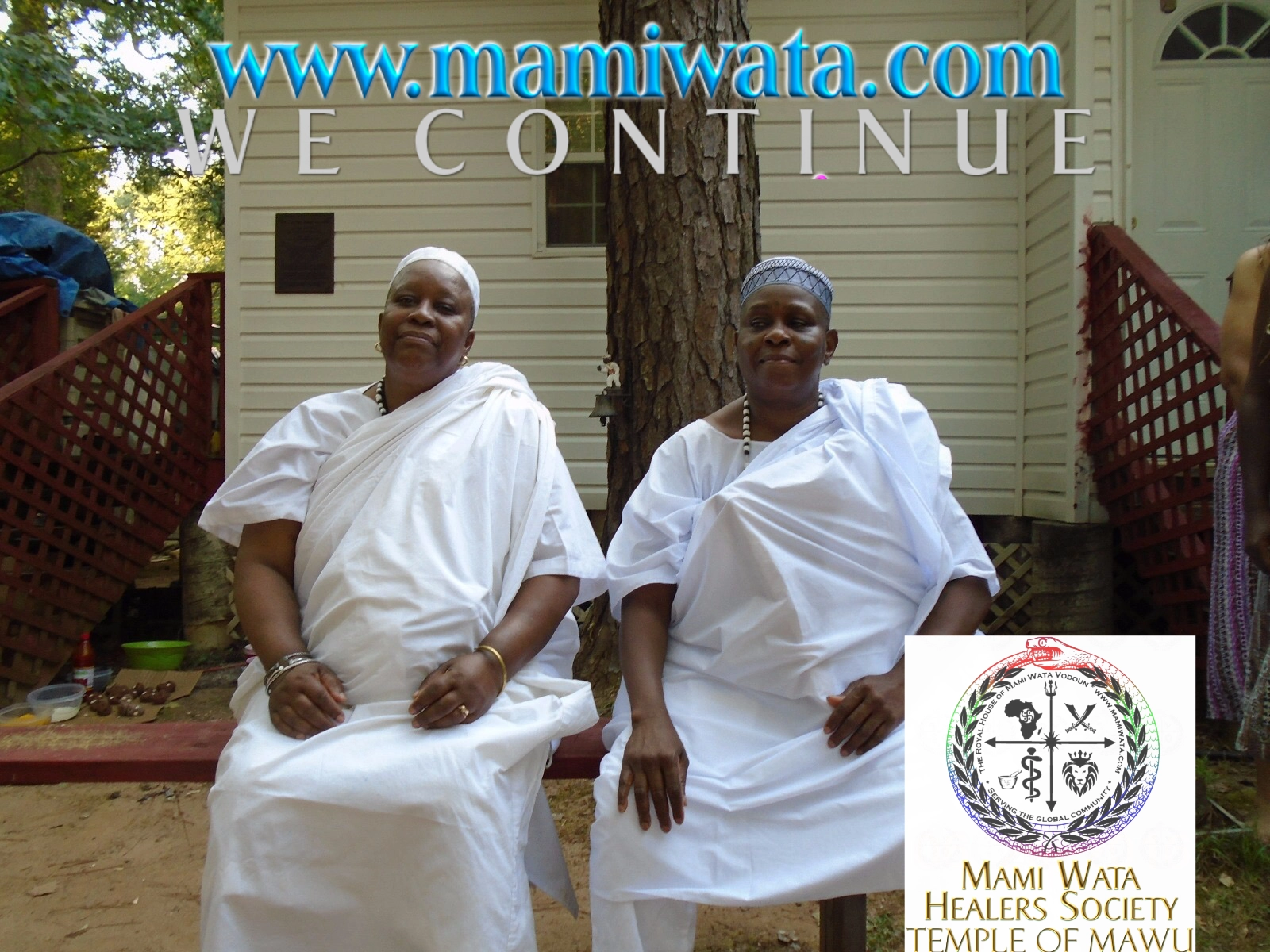
Above: Chief Hounon Amengansie Mama Zogbé, initiated full Bokono (Atá) in Togo, West Africa.
Since its inception, Afa has been open to all whom are called by the Spirits in Vodoun. The word Afa in the Vodoun religion means Keeper of the Mysteries which was later changed to Father of the Mysteries during the rise of African patriarchy. When Afa speaks that Bokono is the path of the individual, all socially imposed injustices are exposed concerning women being initiated as full Bokonos.
In the Vodoun, women at any stage of life can receive full initiation as Bokono just as the men. Women (and girls) are also called to take either “one” or “both hands” of Afa.
However, it is recommended that women of childbearing years not consider the path of full Bokono, because it is often difficult for them to bear children afterwards.
Today, women only make up a small number of Bokonos in comparison to the men. This reality however, is not due to them not being called. The problem is economic. During the rise and subsequent entrenchment of African patriarchy, the economic status of African women had greatly declined. This affected all aspects of their political and spiritual status within the community. This dis-empowerment rendered them unable to effectively compete with the aggressive and active cultural entrenchment of the patriarchs, who now boast complete economic and political dominance in Africa.
Unfortunately, as the Diaspora resurrects their ancestral lineages after having had ceremony in Africa, many return to their respective homes espousing the same political and social beliefs that are not rooted in Africa’s spiritual history. Learning and understanding the precolonial social and political history of Africa is critical in correcting these and other social injustices. It is also crucial to understand that these ideas are not rooted in Western feminism, but arise directly from the ancient social and political history of Africa, which the historical evidence implies might have led to its subsequent decline.
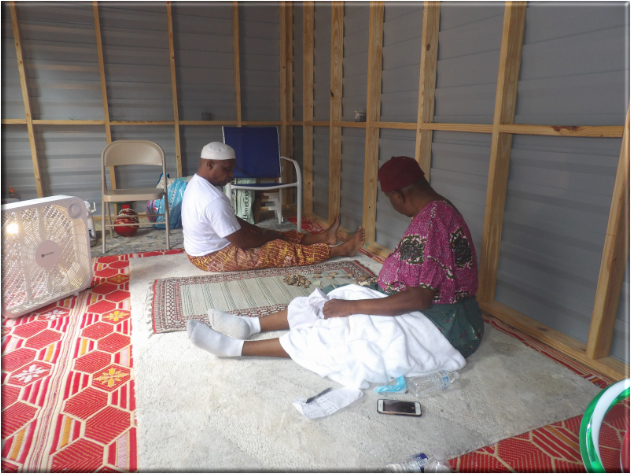
Above: Chief Hounon Amengansie Bokono Hounon Mama Zodédé and Shrine Father Papa Adjakpassis Hounga.
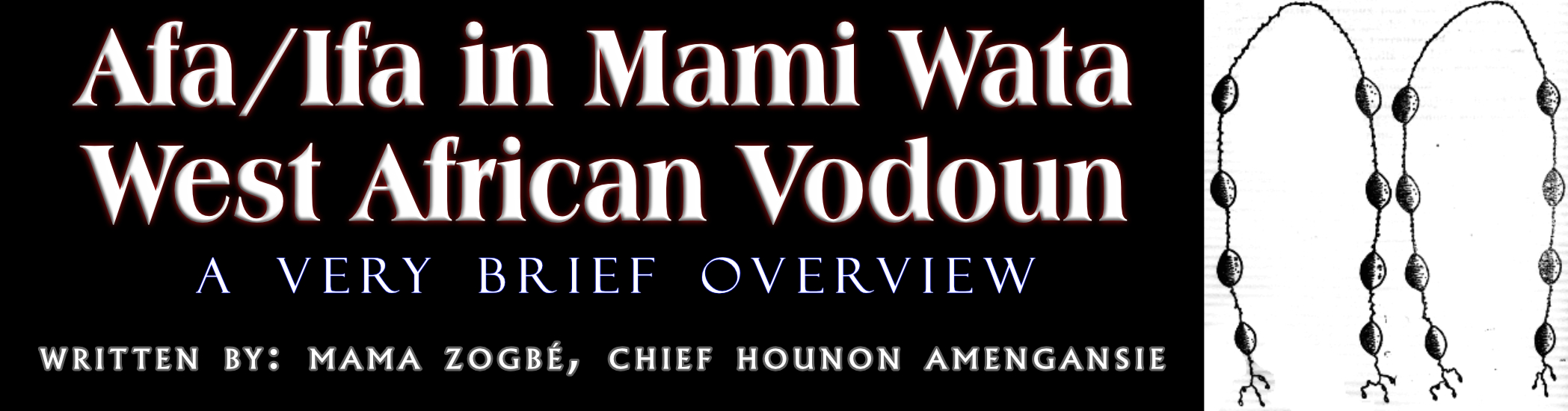
Sometimes referred to as Fa-Ahid goun, this holy form of divination is performed by specialized priests or priestesses of Afá known as Bokonos or Afavis. It is they who discern the will of the gods, by interpreting their sign language which is communicated to them through the manipulation of certain specialized objects which are assigned by Mawu. One of these instruments consists of a total of sixteen palm nuts, known as dekí. Another tool that can be used and is favored by the Afa diviner, is the throwing of a sacred pair of brass divining chains known as a pélé. A pélé chain has attached to them in evenly spaced, intermittent rows, a total of eight pairs of dried, half-seed pélé pods, terminating with a total of five to eight cowrie shells or coins.
This pélé is gently manipulated (the spirits), by tossing it forward and backwards, and the diviner reading the characters and marking their position on the opon. It is Mami (Wata), the Vodoun deities, the ancestors and the recent dead who speak through the holy Afa. Afa is utilized for all important ceremonies.
In the Mami Wata Vodoun, both men and women are initiated to Afa. However, economics prevents most women from being full Bokonos.
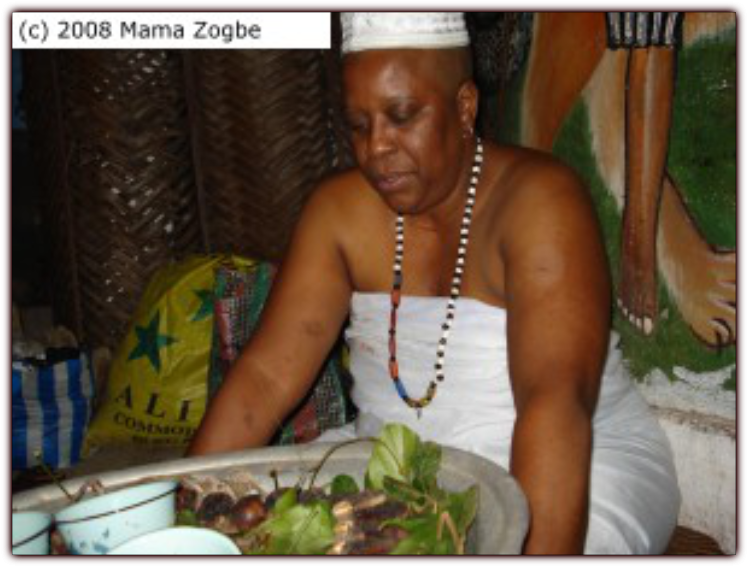
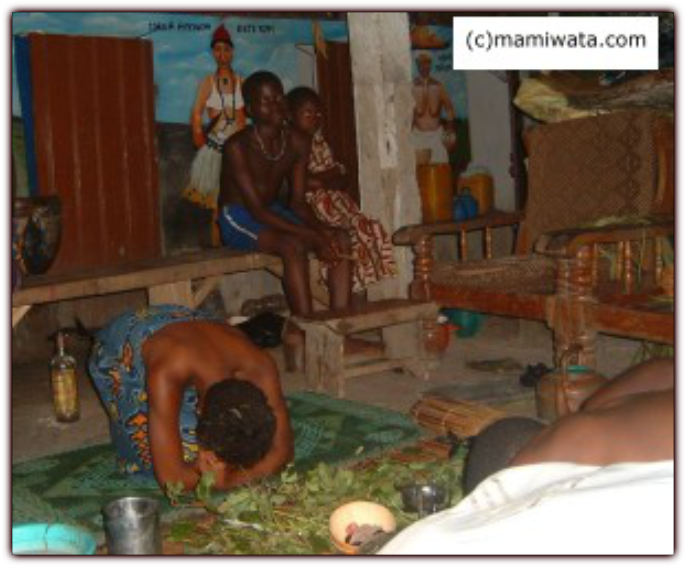
Chief Hounon-Amengansie Mama Zogbé. Togo, West Africa. (rt) young Togolese girl being initiated to Afa. Afa at all levels is open to both girls and women. However, women of childbearing years are cautioned to wait until they have had all their children before answering the call to full Bokono.
In Togo, it is Alaundje who is honored as the first Bokono to have been taught by Gabadu how to divine the destiny of humans using the holy system of Afá. However, there has been much debate largely spawned by western anthropologists, crediting the Yoruba with introducing Afá into the Vodoun tradition. When asked, any competent Togolese Bokono will quickly point to Nigeria as the original source of Afá. However, when they do, they are referring to Ketu, the home of their own ancient ancestors. They refer to this oldest form of Afa as “Anago,” their native (pre-Yoruba) ethnic identity in the region from which their ancestors settled centuries ago.
Some older Togolese diviners claim that Afa is the tradition of the slave. That it was they who taught the Yorubas how to divine with Afa. They also claim that because of the arrogance of the Yoruba, they did not teach them all of their mysteries. They claim this attitude stems from how their ancient ancestors were forced to flee from their ancestral homelands in Nigeria, when the militaristic Oyo Empire began to expand and tried to force their hegemony upon them. They claim that many of their ancestors were enslaved and sent to the “New World” by the Yoruba, forcing many Ewe to flee Anago, and settle into Tado, Notsie (Togo), Benin and Ghana around the 11th century as a result.
The truth of Afa’s origins may be that Jihoussou of the Ewe, and Orunmila of the Yoruba are two of many sons and daughters of God, and each were given specific knowledge of Afa/Ifa respective to their lineage groups, and particular circumstance in life. What is clear is that the Ewe and Fon have their own ancestral history of how Afa came to them by their ancestors. What is also evident is that the majority of the Ewe people do not speak or understand the Yoruba language nor do they make the Orisha. Ewe Bokonos of the Vodoun also do not travel to Nigeria to initiate nor to learn Afa. Nor do they pay homage in their sacred lineage prayers to any Nigerian landmark/Egbé or ancestor other than Ketu who brought them Afa. A sacred rite that would be required of them if one were to believe the universally accepted western notion that Afa is the exclusive birth child of what has been classified as the Yoruba people.
In Benin, the Fon claim that Afá came with the (Ewe) Nago during the time of Dahomean King Agadja, and was brought by an Ewe Bokono named Gogo, from Zado in the East (Ketu, Nigeria). Gogo actually didn’t introduce it himself, it is said that he informed the King that two Ewe Bokonos (father of mysteries) named Gougou and Jissa knew Afá.
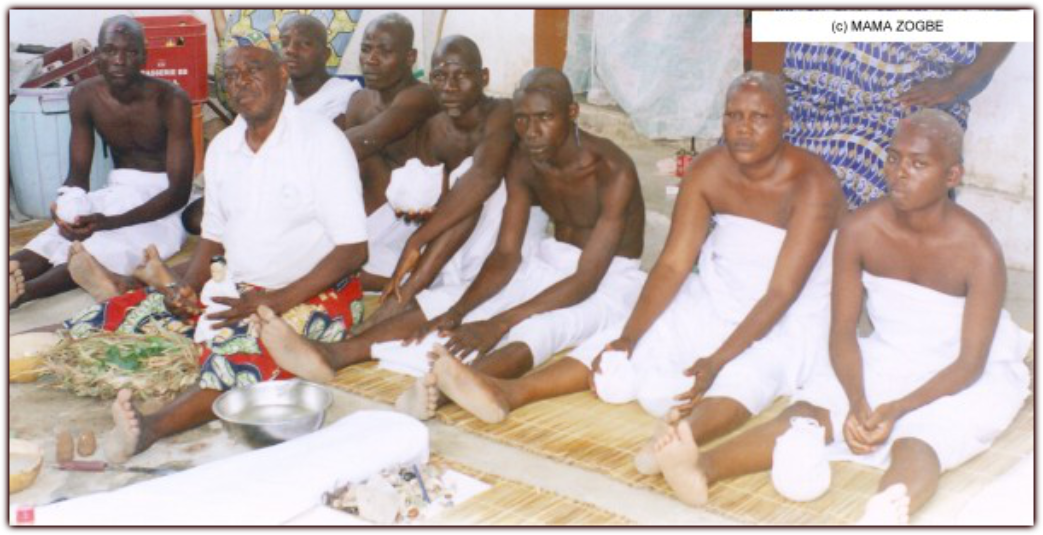
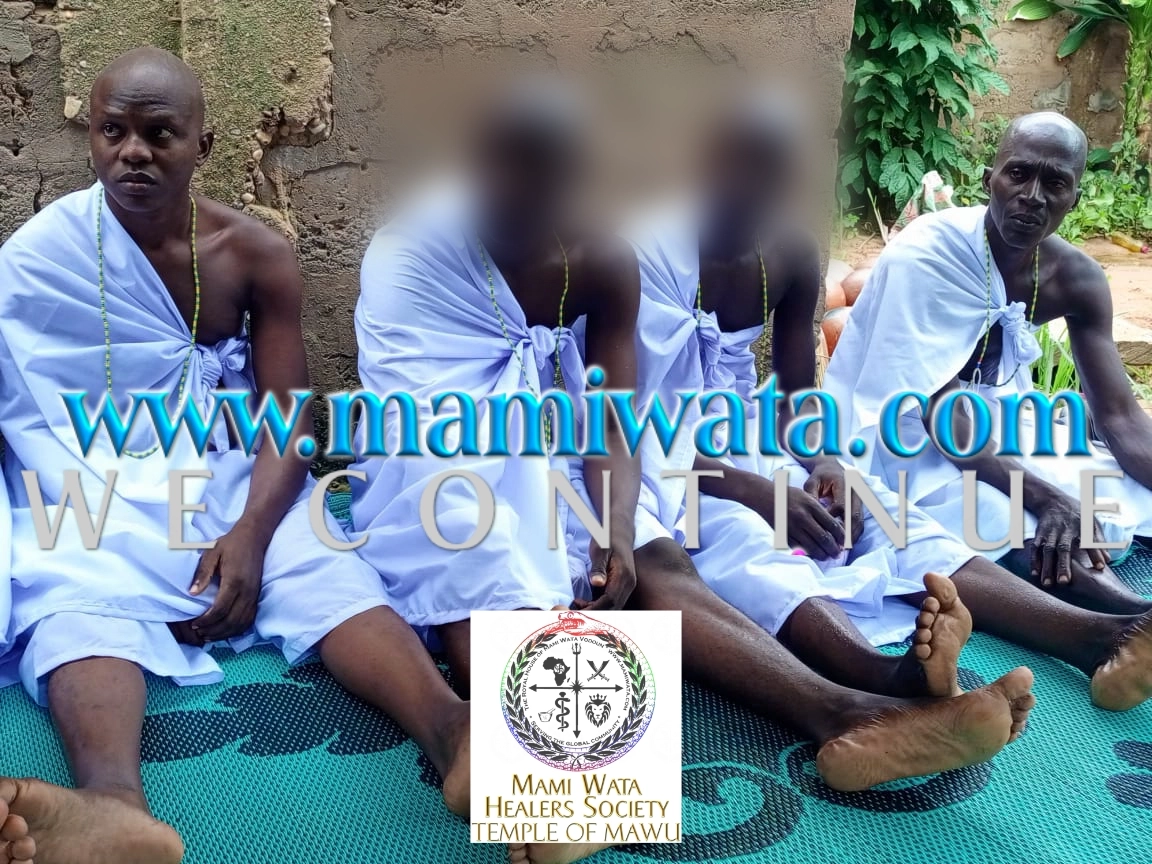
Men and Women Afavis after completing Afa initiations.
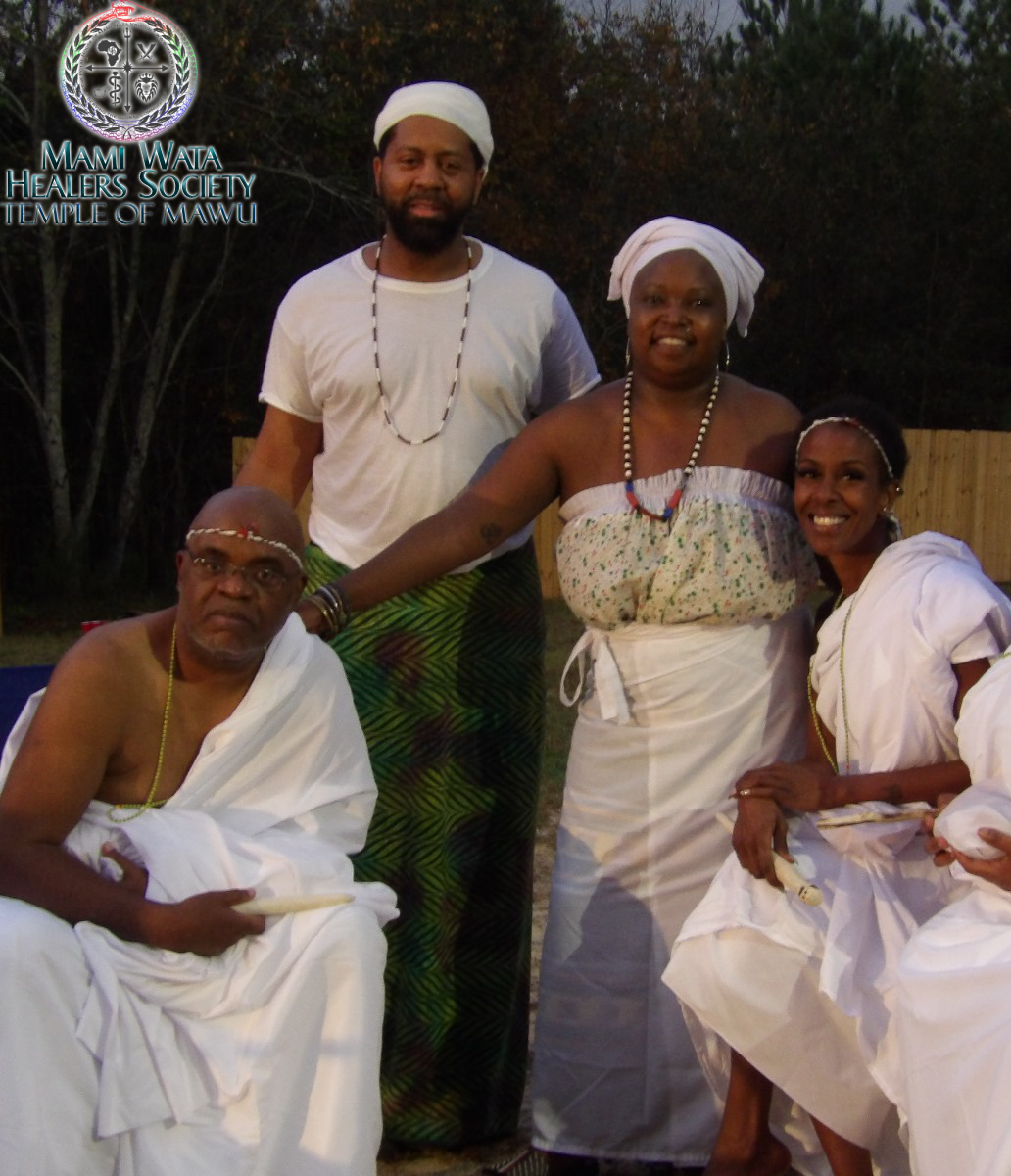
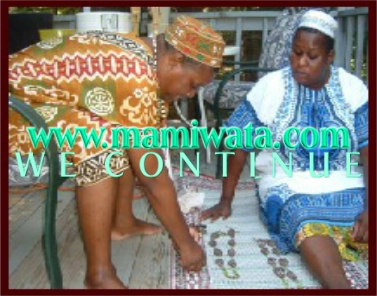
Mama Zogbé (lft) and Mama Zodédé throwing pélé (Afa). Both men and women are initiated to Afa in Mami Wata Vodoun. (Augusta, GA, 2005).
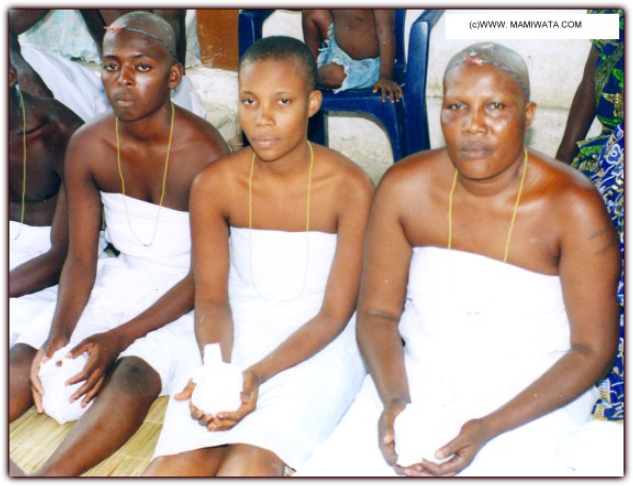
Two girls and one woman initiated to Afa. The two girls are children of Djihoussou and the women is a wife of Djihoussou. If they are called to full Bokono, they will enter the sacred forest and receive full Atá (knife) just as the men.
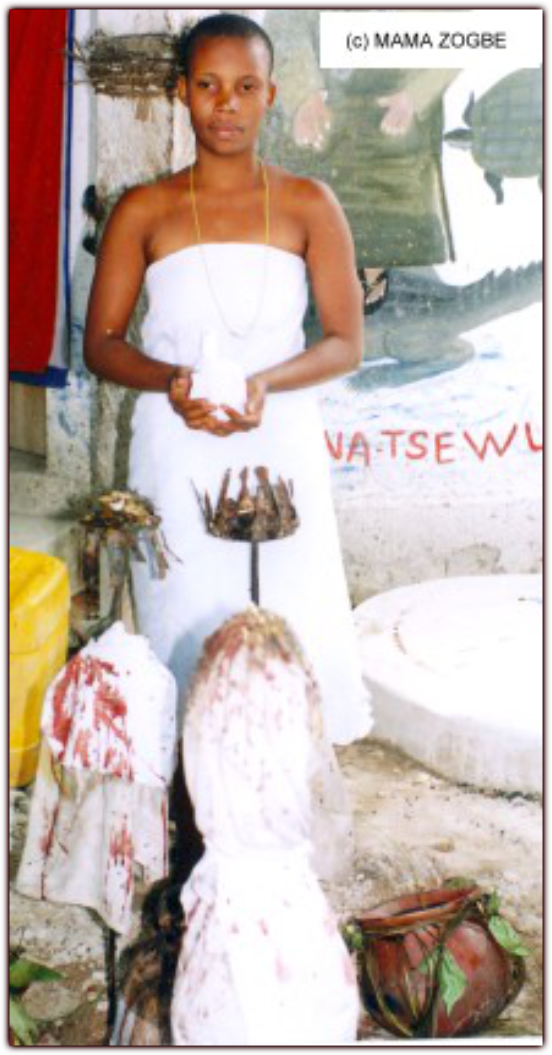
Togolese girl with head shaven as new Afavsi. Initiation to Afa is just as important in setting girls on their spiritual paths as it is with boys.
However, it was not tested until after a very severe drought plagued the lands, and the king tried the skill of all of his Fon diviners with no luck. After challenging Gougou and Jissa to bring rain, they succeeded, proving the superiority of their system of Afá. From this encounter, the king is alleged to have adopted it himself.
It is important to note that the ancient Ewe peoples do not define themselves as the Dahomean descendants of present day Benin. The Fon groups of ancient Dahomey, are an ancestral sub-group of the Ewe, who settled into what is now Benin, while the Ewe, the major Vodoun groups settled into Notsie (Togo) and Ghana.
Although ancestrally affiliated, anthropologists have mislabeled these two groups as being one and the same, not taking into account the different ancestral subgroup lineages from which they descend. The Dahomeans (Fon) were not originally worshipers of the Vodoun, for they‘d originally feared and despised the Serpent deities, but later acquired a tolerance for them after learning of their enormous power to protect the Dahomean kings. The major totemic spirits of the original Fon was the leopard, and the panther, and not the serpent spirits who dominate the Ewe Vodoun pantheon. There also exist a small group of Yoruba-Vodou Egbés who are ancestrally related stemming from the marriage of one of the sons of the Oyo king to a Dahomean princess.
For more information on Afa, please visit our bookstore and purchase Afa: A Brief Introduction to the Sacred Anago System of Divination in Ewe Vodoun, Available Now!
Related Media: African Tradition & Culture: Afa